

Why home and travel logins need more care
When staff log in from a kitchen table, a client site or an airport lounge, the risk is not only a weak password. It is also the device, the wifi network, the browser saved logins and who can see the screen over a shoulder. In Cape Town, Johannesburg or Durban, a simple lost phone or an unlocked laptop can open access to mail, files and business apps in seconds.
Load shedding adds another problem. People rush to reconnect after power cuts and that is when they reuse easy passwords, send links on chat, or sign in on a borrowed device just to keep work moving. The safer approach is to make the login process clear enough that staff can follow it under pressure, even at 8pm when they are trying to finish a task before the power goes off again.
- Limit access to only the apps a person needs for their role.
- Require a unique password for every account, never one shared set for the whole team.
- Make sure lost or stolen devices can be removed from access quickly.
- Keep a simple record of who approved each access request.
Start with one secure place for passwords
Most login trouble comes from passwords being stored in too many places. Some are in notebooks, some in spreadsheet files, and some in personal phone notes. That makes it hard to know who has access when someone leaves, changes roles, or helps out only for a short period. A password manager gives the business one controlled place to store and share credentials.
For small teams, the real value is not only convenience. It is the ability to reduce repeated typing, stop password sharing through chat apps, and remove access without chasing down every person. If a staff member is working from Pretoria one week and Gqeberha the next, they should still sign in the same way, without needing to ask a colleague to forward a password.
- Create separate vaults or folders for finance, operations, sales and admin.
- Use role based access so people only see the items they need.
- Store recovery details in a controlled admin area, not in open chat groups.
- Review shared access after each new hire, role change or resignation.
Use single sign-on to cut password clutter
Single sign-on lets staff use one trusted login to reach approved business apps. That cuts the number of passwords to remember and lowers the chance of people reusing the same password across several services. For a small company, it also saves admin time because access can be set up once and then managed in a cleaner way.
It helps especially when teams work across branches and remote locations. A person in Stellenbosch can sign in to the same system as someone in Durban without different procedures for each app. If a device is lost on the train or a contractor finishes a short project, access can be switched off from one control point instead of being removed one app at a time.
Set up the account structure carefully from the start. If the permission map is messy, single sign-on can become a messy shortcut instead of a control tool. That is why the right setup matters more than the software alone.
Make remote access safer before staff leave the office
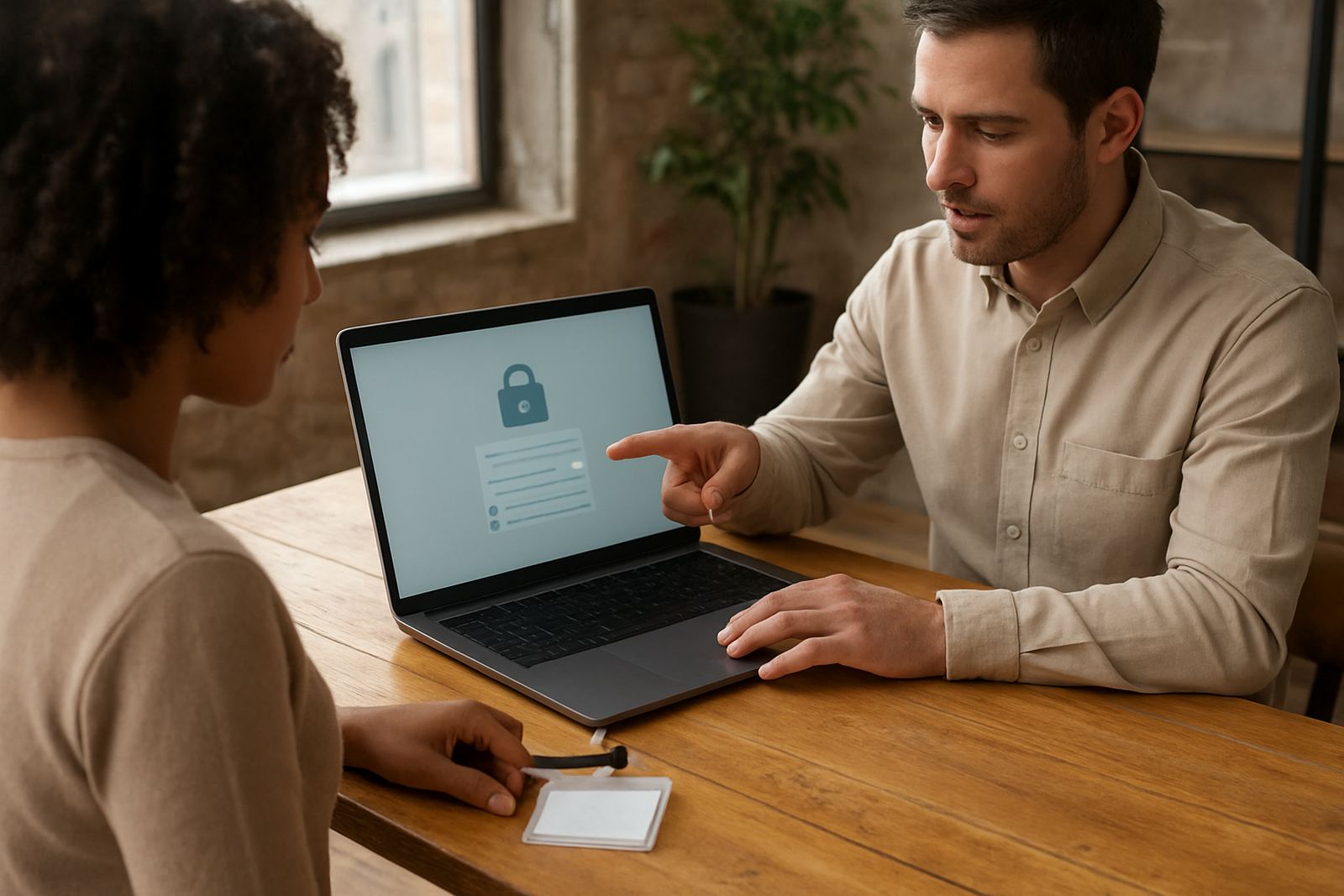
Login safety works best when the rules are set before people start working remotely. Each staff member should know where to store passwords, how to reset access, what to do if a device is lost and who to contact if they suspect a login has been used by someone else. Keep the process short enough to remember, but specific enough to follow without guessing.
It also helps to standardise the devices and apps used by the team. If half the company uses personal laptops and the other half uses shared devices, support becomes difficult and risks increase. A clear setup reduces confusion and makes training easier for new staff too.
- Turn on multi factor authentication for every account that supports it.
- Update passwords immediately after onboarding, not weeks later.
- Use strong screensaver lock settings on laptops and mobile devices.
- Ban shared generic logins except where there is a documented business reason.
A local example is a small design firm in Woodstock with three staff at the office and two remote workers in Gauteng. They used to keep passwords in a messaging group, which meant anyone who had the chat could see them. After moving to a proper access structure, each person received only the apps they needed and the manager could remove access from one place when a freelancer finished. The team spent less time chasing logins and more time on client work.
Protect travelling staff from avoidable mistakes
People who travel for work often sign in from cafés, hotels and client sites. That is where careless habits can cost a business money and time. Public wifi should never be treated as a safe default and open networks are best avoided when sensitive accounts are involved. If a connection must be used, staff should know the company rule first, not make it up on the spot.
Travelling staff also need clear steps for device care. A laptop left in a car overnight in Durban humidity or a phone left on a table at a conference can be exposed quickly. The issue is not only theft. It is also someone watching a password being typed, or a device being used while the owner steps away for five minutes.
- Require device locking when a user steps away, even briefly.
- Do not allow password sharing over voice notes or plain chat messages.
- Keep backup admin contacts for urgent lockouts and access changes.
- Train staff to report lost devices within minutes, not the next day.
Keep access reviews and offboarding on a fixed schedule
Even a good login setup weakens over time if nobody checks it. Quarterly access reviews help confirm that every user still needs what they can see. That matters for businesses with part time staff, contractors and people who move between projects. It also reduces the chance of old accounts staying active long after they should have been closed.
Offboarding is just as important. When someone leaves, their access should be removed from message accounts, files, shared passwords and approved apps without delay. If the process is not written down, it is easy to miss one system, especially when people are busy or working across different towns. A short checklist makes the handover more reliable.
For small business teams, good login safety is not about locking everything down too hard. It is about making access orderly, traceable and easy to manage when people are working from home, on the road or from different provinces.